Hexactinellida |
Lyssacinosida |
Rossellidae
Milieu: milieu / Klimaatzone / Diepte / verspreidingsgebied
Ecologie
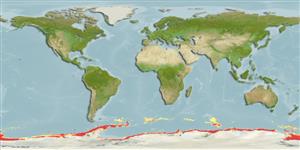
Sessile; diepte 18 - 2000 m (Ref. 89939). Polar
Antarctic.
Lengte bij maturiteit / Grootte / Gewicht / Leeftijd
Maturiteit: Lm ? range ? - ? cm
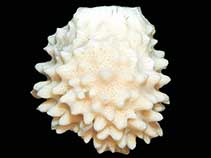
Color: white, yellow, or orange. Growth form: varies from large to barrel or vase shaped for adults around 50 cm high; or vase or egg shaped for budding types up to 15 cm high (Ref. 089939).
Deposits spicules on soft substrates, eventually forming hard mats that is important in colonization. Suspension feeder. Photosynthetic diatoms are present within its cells, but role is still unclear. Reproduction is both sexual and asexual (Ref. 089939).
Levenscyclus en paargedrag
Maturiteit | Voortplanting | Paaien | Eieren | Fecunditeit | Larven
Members of the class Hexactinellida are hermaphroditic. Life cycle: The zygote develops into trichimella larva (free-swimming) before settling down on a substrate where it grows into a young sponge.
Andrew, N. and M. Francis 2003 The living reef. The ecology of New Zealand's rocky reefs. Craig Potton Publishing, New Zealand. 283pp. (Ref. 82739)
Status op de Rode Lijst van het IUCN
(Ref. 130435: Version 2025-2 (Global))
CITES status (Ref. 108899)
Not Evaluated
Not Evaluated
Gevaar voor de mens
Harmless
Gebruik door de mens
| FishSource |
Tools
Meer informatie
Trofische ecologieVoedsel (prooien)DieetsamenstellingVoedselconsumptiePredatoren PopulatiedynamicaGroeiMax. leeftijden / matenLengte-gewicht rel.Lengte-lengte rel.LengtefrequentiesMassaconversieAbundantie LevenscyclusVoortplantingMaturiteitFecunditeitPaaienEierenOntwikkeling van de eierenLarven FysiologieZuurstofverbruik
Menselijk gerelateerdPostzegels, munten, diversen.
Internetbronnen
Schattingen op basis van modellen
Gewenste temperatuur
(Ref.
115969): -1.9 - 1.4, mean -0.6 (based on 1968 cells).