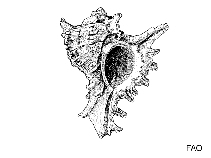
Gastropoda |
Neogastropoda |
Muricidae
Milieu: milieu / Klimaatzone / Diepte / verspreidingsgebied
Ecologie
Benthic; diepte 1 - 100 m (Ref. 105991). Subtropical; 49°N - 27°N, 19°W - 36°E
Eastern Atlantic and Mediterranean: from France to Spain, Portugal, Morocco, Madeira Island and Canary Islands, including the Mediterranean.
Lengte bij maturiteit / Grootte / Gewicht / Leeftijd
Maturiteit: Lm ? range ? - ? cm Max length : 8.3 cm SHL mannelijk / geslacht onbekend; (Ref. 123052); max. gepubliceerd gewicht: 58.20 g (Ref. 123052)
Intertidal to a depth of 80 m. Found in a lagoon (Ref. 105976). Also found offshore (Ref. 122927). Inhabits rocky, sandy-mud and mud substrata (Ref. 105992). Also found on seagrass (Ref. 85545). Opportunistic feeder, exhibiting both carnivory and scavenging. Feeds on a variety of bivalves, including gastropods, barnacles, tunicates, bryozoans, carrion and its conspecifics. Employs drilling and chipping patterns on certain bivalves (Ref. 106099).
Levenscyclus en paargedrag
Maturiteit | Voortplanting | Paaien | Eieren | Fecunditeit | Larven
This species is a non-broadcast spawner. Life cycle does not include trocophore stage. Also Ref. 833.
Templado, J. and R. Villanueva 2010 Checklist of Phylum Mollusca. pp. 148-198 In Coll, M., et al., 2010. The biodiversity of the Mediterranean Sea: estimates, patterns, and threats. PLoS ONE 5(8):36pp. (Ref. 85339)
Status op de Rode Lijst van het IUCN
(Ref. 130435: Version 2025-2 (Global))
CITES status (Ref. 108899)
Not Evaluated
Not Evaluated
Gevaar voor de mens
Harmless
Gebruik door de mens
Visserij: commercieel
| FishSource |
Tools
Meer informatie
PopulatiedynamicaGroeiMax. leeftijden / matenLengte-gewicht rel.Lengte-lengte rel.LengtefrequentiesMassaconversieAbundantie LevenscyclusVoortplantingMaturiteitFecunditeitPaaienEierenOntwikkeling van de eierenLarven FysiologieZuurstofverbruik
Menselijk gerelateerdPostzegels, munten, diversen.
Internetbronnen
Schattingen op basis van modellen
Gewenste temperatuur
(Ref.
115969): 14.5 - 21.5, mean 18.7 (based on 202 cells).
Kwetsbaarheid van de visserij
Low to moderate vulnerability (28 of 100).