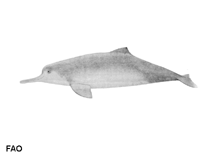
Mammalia |
Cetartiodactyla |
Iniidae
Milieu: milieu / Klimaatzone / Diepte / verspreidingsgebied
Ecologie
Pelagisch; potamodroom (Ref. 75906); zoet water. Subtropical; 31°N - 28°N, 112°E - 122°E
Asia - Inland Waters: China and Yangtze River.
Lengte bij maturiteit / Grootte / Gewicht / Leeftijd
Maturiteit: Lm 200.0 range ? - ? cm Max length : 230 cm TL mannelijk / geslacht onbekend; (Ref. 1394); 260 cm TL (female); max. gepubliceerd gewicht: 135.0 kg (Ref. 1394); max. gepubliceerd gewicht: 135.0 kg
Found in the middle and lower reaches of the river. Feeds on a large variety of fish species (Ref. 1394). Major threats to baiji dolphins includes fisheries, degradation of habitats, river traffic, water pollution (Ref. 85335, 85336), and rolling hooks known to snag and drown baiji (Ref. 85336). In 1997 a comprehensive survey was able to document 13 individuals giving the experts an estimate of a population composed of less than 100 individuals (Ref. 85336). Found in the middle and lower reaches of the river. Feeds on a large variety of fish species (Ref. 1394).
Levenscyclus en paargedrag
Maturiteit | Voortplanting | Paaien | Eieren | Fecunditeit | Larven
Jefferson, T.A., S. Leatherwood and M.A. Webber 1993 FAO species Identification Guide: Marine Mammals of the World. Rome, FAO. 320 p. + 587 figures. (Ref. 1394)
Status op de Rode Lijst van het IUCN
(Ref. 130435: Version 2025-2 (Global))
CITES status (Ref. 108899)
Not Evaluated
Gevaar voor de mens
Gebruik door de mens
Visserij: commercieel
FAO - visserij: soortsprofiel | FishSource | Sea Around Us
Tools
Meer informatie
Trofische ecologieVoedsel (prooien)
Dieetsamenstelling
Voedselconsumptie
Predatoren
PopulatiedynamicaGroei
Max. leeftijden / maten
Lengte-gewicht rel.
Lengte-lengte rel.
Lengtefrequenties
Massaconversie
Abundantie
FysiologieZuurstofverbruik
Menselijk gerelateerdPostzegels, munten, diversen.
Internetbronnen
Schattingen op basis van modellen
Kwetsbaarheid van de visserij
High to very high vulnerability (75 of 100).
Prijsklasse
Unknown.