Mammalia |
Cetartiodactyla |
Delphinidae
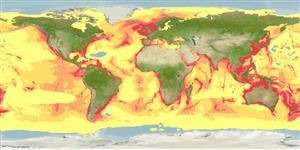
Lingkungan: lingkungan / zona iklim / kisaran kedalaman / jangkauan distribusi
Ekologi
Pelagis, permukaan; oceanodromus (Acuan 75906); kisaran kedalaman 0 - 1316 m (Acuan 116169). Tropical
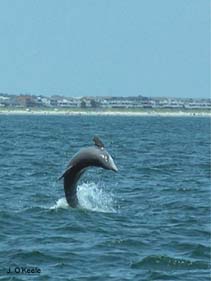
208994 Tursiops truncatus gephyreus. Southwest Atlantic.
Panjang pada saat jatuh tempo pertama / Ukuran / Berat / umur
Kematangan: Lm ?, range 240 - 260 cm Max length : 380 cm TL jantan/; (Acuan 1394); Berat maksimum terpublikasi: 650.0 kg (Acuan 1394)
This coastal subspecies (Tursiops truncatus geyphyreus) can be distinguished from the nominate offshore subspecies (Tursiops truncatus truncatus) by the following diagnosable cranial features: W-shaped border of the antorbital notch (vs. U-shaped); barely or not visible interparietal bone (vs. clearly visible); cranial vertex from the posterior end of nasals to the nuchal crest is short and rectangular (vs. long and squared); left nasal bone noticeably smaller and more compressed antero-posteriorly than the right (vs. nearly symmetrical); Falciform lateral margin of the ascending process of right premaxilla (vs. straight or slightly concave); lateral margin of the ascending process of the maxillae over the preorbital process is deflected dorsally (vs. flat) (Ref. 128824).
Preyed upon by great white sharks (Ref. 32140). Dolphins are directly caught for use as shark-bait in Sta. Ana and Aparri, Philippines (Ref. 77119). Found primarily in coastal and inshore regions of tropical and temperate waters of the world (Ref. 936) and deeper channels between islands (Ref. 122680). Also inhabits pelagic waters, such as those in the eastern tropical Pacific (Ref. 936). In herds of less than 20 individuals (Ref. 801). Feeds either cooperatively or in solitary. They can obtain prey via 'fish whacking' and steering fish onto mudflats (Ref. 122680). Feeds on fish (Refs. 801, 936) crustaceans, and cephalopods (Ref. 801).
Siklus hidup dan perilaku kawin
Kematangan | Reproduksi, perkembang biakan | Pemijahan | telur-telur | Fekunditas | Larva
rujukan utama
Acuan | Koordinator | mitra
Tan, J.M.L. 1995 A Field Guide to the Whales and Dolphins in the Philippines. Makati City: Bookmark. 125 p. (Acuan 936)
status CITES (Acuan 108899)
ancaman kepada manusia
penggunaan manusia
Perikanan: komersial; umpan: usually
FAO - Perikanan: pendaratan, profail spesis | FishSource |
Alat, peralatan
informasi lanjut
Ekologi trofikItem makanan (mangsa)
Komposisi makanan
Konsumsi makanan
Pemangsa
Dinamika populasiPertumbuhanMaks. usia / ukuranPanjang-berat rel.Panjang-panjang rel.ukuran frekuensiKonversi massaKelimpahan Siklus hidupReproduksi, perkembang biakan
Kematangan
Fekunditas
Pemijahan
telur-telur
pekembangan telor
Larva
FisiologiKonsumsi oksigen
Yang berhubungan dengan manusiaPerangko, koin, dll.
Sumber internet
Estimasi berdasarkan model
Suhu yang disukai
(Ref.
115969): 6.4 - 28.9, mean 20.3 (based on 16698 cells).
Kerentanan Penangkapan Ikan
Very high vulnerability (76 of 100).
kategori harga
Unknown.