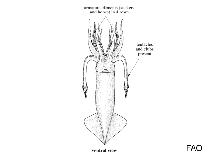
Cephalopoda |
Oegopsida |
Gonatidae
Environment: milieu / climate zone / depth range / distribution range
Ecology
Bathypelagic; depth range 0 - 1500 m (Ref. 275). Tropical; 66°N - 30°N, 127°E - 94°W
North Pacific. Tropical to polar climates.
Length at first maturity / Size / Weight / Age
Maturity: Lm ? range ? - ? cm Max length : 28.0 cm ML male/unsexed; (Ref. 104302); max. reported age: 4 years (Ref. 104304)
Maximum depth from Ref. 104112. Occurs in the outer edge of continental shelf and slope. Juveniles are mostly in midwater at mesopelagic depths; adults mainly occur in bottom layers in the upper bathyal zone. Exhibits diel vertical migration (Ref. 104112).
Life cycle and mating behavior
Maturity | Reproduction | Spawning | Eggs | Fecundity | Larvae
Members of the class Cephalopoda are gonochoric. Male and female adults usually die shortly after spawning and brooding, respectively. Mating behavior: Males perform various displays to attract potential females for copulation. During copulation, male grasp the female and inserts the hectocotylus into the female's mantle cavity where fertilization usually occurs. Life cycle: Embryos hatch into planktonic stage and live for some time before they grow larger and take up a benthic existence as adults.
Roper, C.F.E., M.J. Sweeney and C.E. Nauen 1984 FAO Species Catalogue. Vol. 3. Cephalopods of the world. An annotated and illustrated catalogue of species of interest to fisheries. FAO Fish. Synop. 125(3):277p. Rome: FAO. (Ref. 275)
IUCN Red List Status
(Ref. 130435: Version 2025-1)
CITES status (Ref. 108899)
Not Evaluated
Not Evaluated
Threat to humans
Human uses
Fisheries: commercial
FAO - Fisheries: landings | FishSource |
Tools
More information
PhysiologyOxygen consumption
Human RelatedStamps, coins, misc.
Internet sources
Estimates based on models
Preferred temperature
(Ref.
115969): 0.6 - 7.2, mean 4.3 (based on 237 cells).
Fishing Vulnerability
Low vulnerability (21 of 100).